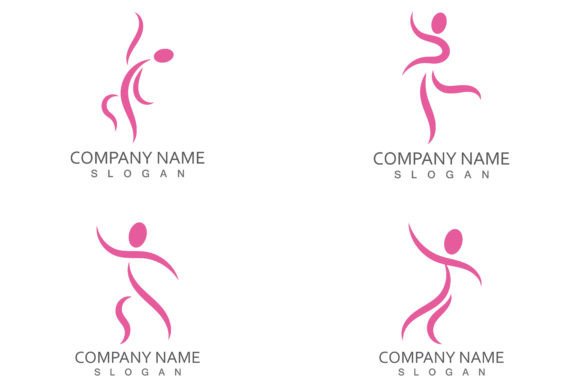
Dancer Logo and Symbol Vector: Crafting Fluid Brand Identities
When you are building a brand identity for a fitness studio, yoga school, or a modern art academy, static imagery often fails to capture the energy you are trying to sell. This is where the Dancer Logo and Symbol Vector collection shines. It isn’t just a set of generic shapes; it is a carefully curated library of movement translated into digital art. For designers, entrepreneurs, and content creators, these assets provide the missing link between a static logo and the dynamic feeling of the service being offered. The visual language here relies on fluid curves, negative space, and the inherent grace of the human form, offering a sophisticated way to communicate health, beauty, and success without saying a word.
The Anatomy of Movement: Visual Style and Appeal
The core appeal of the Dancer Logo and Symbol Vector lies in its ability to abstract the human body into clean, recognizable shapes. Whether you are looking at a stylized ballerina in a classic arabesque or a modern figure in a high-intensity gym pose, the design principles remain consistent. These vectors utilize bold, flowing lines that suggest motion even in a static environment. The silhouettes are often isolated against backgrounds, making them incredibly versatile for layering over photos, textures, or solid color blocks. You will notice the emphasis on the "line of beauty"—that classic S-curve that artists have used for centuries to depict grace. This makes the symbols feel premium and timeless rather than trendy and disposable.
From a graphic design perspective, the style varies widely within this category, catering to different brand personalities. You can find abstract interpretations that reduce a dancer to a single, continuous brushstroke, perfect for high-end wellness brands. Conversely, there are more literal illustration styles that depict specific exercises or dance forms, which work well for educational institutions or children's dance schools. The vectors are designed to be scalable, meaning a logo that looks crisp on a business card will look equally impressive on a gymnasium banner. This scalability is essential for modern branding, where a single icon might need to function as a favicon on a browser tab, a watermark on social media graphics, and a large-format sign on a storefront.
Strategic Applications: Where These Vectors Excel
Understanding where to deploy the Dancer Logo and Symbol Vector is just as important as the design itself. For businesses in the fitness and health sector, these symbols act as immediate identifiers. A yoga studio, for example, benefits immensely from a logo that features a human figure in a meditative or stretching pose. It instantly communicates the service offered—health, body awareness, and lifestyle improvement. However, the application goes beyond just the fitness industry. Modern technology companies, particularly those in wellness tech or wearable fitness devices, often use these abstract human figures to represent "human-centric" design. It softens the hard edges of technology and suggests that the product is designed for real people.
In the realm of editorial design and publishing, these vectors serve as excellent spot illustrations. If you are a blogger or publisher writing about lifestyle, beauty, or mental health, a stylized dancer icon can break up long blocks of text, adding visual interest without distracting from the content. For packaging design, particularly in the cosmetics or activewear industries, a silhouette of a woman or man can add a touch of elegance and sophistication. It suggests that the product inside is designed to enhance the user's natural beauty or physical performance. Even for personal projects, such as a custom t-shirt design for a local dance recital or a gym challenge, these vectors provide a professional foundation that elevates the final product from "homemade" to "handcrafted."
Influence on Brand Perception and Engagement
The choice of imagery in your branding directly influences how your audience perceives your company. Using a Dancer Logo and Symbol Vector does more than just decorate a website; it builds a psychological bridge to your audience. A fluid, jumping figure suggests agility, progress, and freedom. A grounded, strong pose suggests stability, fitness, and discipline. When you pair these strong visual cues with a complementary typeface—perhaps a clean sans serif font for a modern gym or a flowing script font for a ballet school—you create a cohesive narrative. This consistency builds trust. When a customer sees the same high-quality, dynamic imagery across your social media, your signage, and your merchandise, they perceive your business as established and reliable.
Furthermore, these designs aid in visual hierarchy. In a crowded market of logos, the human form naturally draws the eye. We are biologically wired to recognize human shapes and faces. By utilizing a vector of a person, you bypass the cognitive load required to interpret abstract geometric logos. The message is processed instantly: this is about people, movement, and vitality. This immediate recognition is a powerful tool for engagement, particularly in fast-scrolling environments like Instagram or Pinterest.
Practical Guidance for Designers and Entrepreneurs
If you are considering integrating these assets into your workflow, there are a few practical considerations to keep in mind to ensure the best results.
- Evaluating Fit and Style: Not every dancer vector fits every brand. Assess the "energy" of the icon. Is it aggressive and sporty, or soft and meditative? Ensure the vector’s personality aligns with your company's voice. A high-contrast, sharp-edged silhouette might be perfect for a CrossFit box, but it would feel out of place for a holistic massage therapy center.
- Font Pairing Strategies: The visual weight of a dancer icon can be heavy. If your chosen vector is dense and fills the frame, pair it with a lighter sans serif font or a modern typography style to maintain balance. Conversely, if the icon is an open, thin-line illustration, you can afford to use a bolder, heavier font for your logotype to ensure the text doesn't get lost.
- Customization and Uniqueness: The danger of using popular design assets is the risk of looking like everyone else. Don't just download a Dancer Logo and Symbol Vector and use it as-is. Change the color palette to match your specific brand guidelines. Combine two different vectors to create a new shape. Use the vector as a clipping mask for a photo of your actual facility. This transforms a stock asset into a proprietary piece of brand identity.
- Licensing and Scalability: Always verify the commercial license of the vector. Ensure it covers your intended usage, whether that is merchandise, digital ads, or print media. Because these are vector files (usually .AI, .EPS, or .SVG), you have the freedom to scale them infinitely. Take advantage of this by creating responsive logos—a detailed version for large formats and a simplified silhouette for small mobile icons.
Ultimately, the Dancer Logo and Symbol Vector is a versatile tool in the modern designer's arsenal. It bridges the gap between abstract art and functional branding, offering a way to visualize success, health, and human potential. By applying these assets thoughtfully, you can create a visual identity that moves with your audience, capturing attention and communicating value in a fraction of a second.